
Table of Contents
- Introduction
- Why Managing Client Feedback Matters
- Common Challenges Designers Face with Client Feedback
- Key Principles for Effective Feedback Management
- Strategies to Manage Client Feedback More Efficiently
- Tools That Help Designers Streamline Feedback
- Showcasing Designs With the Right Fonts
- Conclusion
- References
1. Introduction Managing Client Feedback Effectively
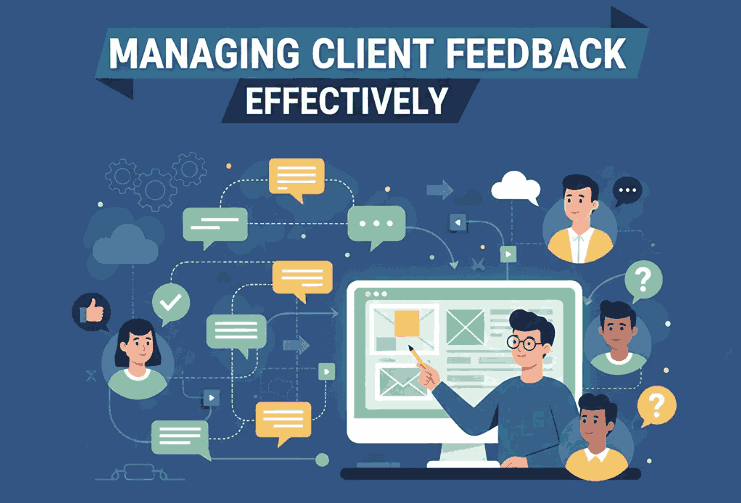
Managing Client Feedback Effectively is one of the most essential skills for designers—yet also one of the most challenging. Whether you are a freelance designer or part of a creative agency, your ability to communicate, guide, and refine client feedback will directly affect your project timeline, revision cycle, client satisfaction, and long-term relationships.
In the world of design, client feedback isn’t just about edits—it’s a collaborative process that shapes the final outcome. An organized workflow paired with strong communication skills helps minimize misunderstandings, reduce excessive revisions, and keep projects moving smoothly.
In this article, we will explore proven techniques on how to manage client feedback effectively, strengthen your communication, and ensure designs reach approval with less friction.

2. Why Managing Client Feedback Effectively Matters
Client feedback influences every stage of the design process. When handled well, it provides:
✅ Clear direction
Clients feel heard and understood, giving designers a clear path forward.
✅ Efficient workflow
Fewer revisions, fewer delays, and faster project completion.
✅ Better relationships
Good communication builds trust and encourages repeat business.
✅ Higher-quality results
Constructive feedback helps refine ideas and strengthen the final product.
On the other hand, unmanaged or unclear feedback often leads to confusion, rework, frustration, and a loss of time and money.
3. Common Challenges Designers Face with Managing Client Feedback Effectively
Designers often encounter communication issues that make the revision process harder. Some of the most common include:
- Vague feedback (“Make it pop” / “It feels off”)
- Too many decision-makers
- Clients unsure of what they want
- Unrealistic expectations
- Endless revision requests
- Slow response times
Understanding these challenges helps designers prepare effective strategies to prevent them.
4. Key Principles for Managing Client Feedback Effectively
To build a smooth and productive feedback process, designers should follow these foundational principles:
1. Set Clear Expectations Early
Define revision limits, deadlines, communication channels, and file formats from the start.
2. Encourage Specific Feedback
Ask clients to explain why they prefer a certain style or color.
3. Maintain a Professional Tone
You are the expert—guide clients respectfully and confidently.
4. Document Everything
Written feedback helps avoid misunderstandings later.
5. Provide Visual Options
Clients respond better to visual comparisons than verbal explanations.
5. Strategies to Managing Client Feedback Effectively More Efficiently
Here are actionable methods designers can use to navigate feedback smoothly:
A. Use a Structured Feedback System
Instead of accepting comments scattered across email, WhatsApp, or messages, direct clients to one platform.
Choose tools like Trello, Notion, Figma’s comment feature, or project management systems.
B. Ask Clarifying Questions
If feedback seems unclear, ask targeted questions such as:
- “Which part do you want to adjust?”
- “Do you prefer a lighter or darker tone?”
- “Can you provide an example of the style you want?”
This eliminates guesswork.
C. Offer Professional Guidance
Clients may not always understand design theory.
Explain why a certain choice works better—color harmony, readability, layout flow, etc.
They will trust your decisions more when backed by reasoning.
D. Break Projects Into Stages
Instead of delivering one full design, present the project progressively:
- Concept / mood board
- Rough layout
- Refined layout
- Final version
This method minimizes drastic changes later.
E. Use Annotated Presentations
Show the design along with notes explaining why certain choices were made.
This helps clients understand the logic behind your decisions.
F. Create a Guide for Managing Client Feedback Effectively
A short guide can help clients express feedback more clearly.
Include prompts like:
- “Please specify colors you want changed.”
- “Please describe what doesn’t feel right.”
- “Please attach references you like.”
6. Tools That Help Designers Streamline Managing Client Feedback Effectively
Here are some tools that make feedback collection easier:
- Figma Comments – Interactive feedback directly on designs
- Miro – Ideal for planning and collaborative feedback
- Notion – Organize client communication and revisions
- Trello / Asana – Track tasks and project stages
- Loom – Record visual explanations for clients
Using these tools speeds up design approvals significantly.
7. Showcasing Designs With the Right Fonts
Typography is a crucial part of presenting design work professionally. The right font can boost aesthetic appeal, clarify hierarchy, and help clients visualize the final outcome more effectively.
Below are recommended fonts from CalligraphyFonts.net that work perfectly as mockups or presentation tools for design projects:
1. Healing Time Font
A modern display typeface ideal for creative headers in presentations.
2. Shailendra Font
An elegant script font perfect for branding previews or soft, premium designs.
3. Breakpass Font
A bold, expressive display font suitable for titles, portfolio headlines, and concept drafts.
Using clean, visually appealing fonts helps reinforce design professionalism and supports smoother client approval.
8. Conclusion Managing Client Feedback Effectively
Managing client feedback effectively is a skill every designer must master. Clear communication, structured processes, and professional guidance help reduce revisions, prevent misunderstandings, and strengthen collaboration.
With the right workflow—and the right visual presentation tools like high-quality fonts—designers can deliver better results while saving time and maintaining long-term client relationships.
By applying the techniques discussed in this article, you can transform feedback from a challenge into one of your strongest tools for success.