Posted on

Free Logo Design Brief Template: What to Include, How to Works & Best New Practices

Logo Design Brief Template

Table of Contents

  1. Introduction
  2. What Is a Logo Design Brief?
  3. Why You Need a Logo Design Brief Template
  4. Key Elements of an Effective Logo Design Brief
    • 4.1 Company Background
    • 4.2 Brand Personality
    • 4.3 Target Audience
    • 4.4 Competitor Insights
    • 4.5 Project Objectives
    • 4.6 Preferred Style & Visual Direction
    • 4.7 Color Palette & Typography
    • 4.8 Usage Requirements
    • 4.9 Budget & Timeline
  5. Sample Logo Design Brief Template (Ready to Copy)
  6. Best Fonts for Logo Design (Font Mockups Included)
  7. Tips for Designers & Clients
  8. Conclusion
  9. References

1. Introduction Logo Design Brief Template

Logo Design Brief Template Creating a great logo doesn’t start with sketching—it starts with clarity. A clear, well-structured Logo Design Brief Template helps designers understand a brand’s identity, mission, audience, and visual expectations before the creative process begins. Whether you are a designer or a business owner, using a strong brief ensures smooth communication, faster revisions, and a professional final result.

This article will guide you through everything you need to include in a powerful logo design brief, complete with a ready-to-use template and recommended fonts you can use for your branding projects.
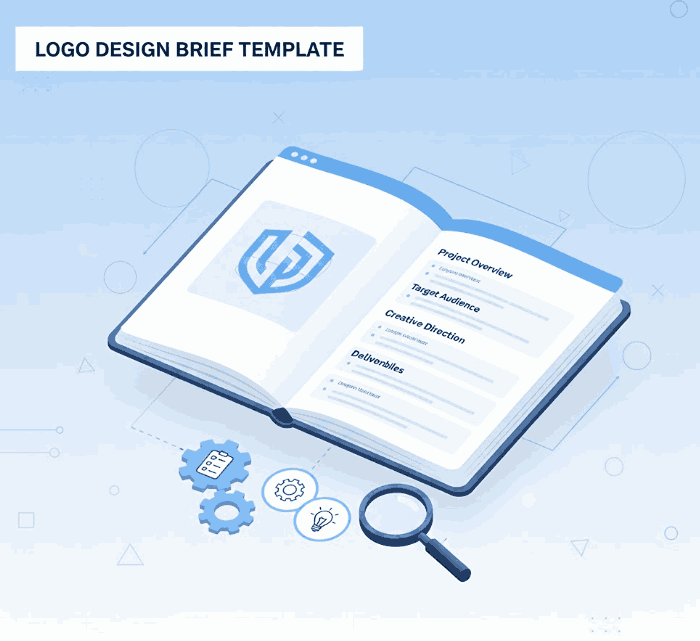
Logo Design Brief Template

2. What Is a Logo Design Brief Template?

A logo design brief is a document that outlines essential information about a brand, design goals, project requirements, and visual preferences for creating a new logo. It acts as the foundation of the entire design process, ensuring both client and designer are aligned from the start.

Without a proper brief, the logo creation process becomes guesswork—and costly revisions are bound to happen.

3. Why You Need a Logo Design Brief Template

A professional Logo Design Brief Template helps you:

  • Gather essential brand information quickly
  • Communicate expectations clearly
  • Prevent misunderstandings
  • Reduce revision rounds
  • Speed up project delivery
  • Improve collaboration
  • Build brand consistency

Most importantly, a template ensures every detail is covered—no missing pieces that might slow down the project later.

4. Key Elements of an Effective Logo Design Brief Template

4.1 Company Background

Provide critical information such as:

  • Company name
  • Industry
  • Products or services offered
  • Unique selling points (USP)
  • Mission and vision

This helps designers understand what makes the brand special.

4.2 Brand Personality

Is the brand modern or traditional? Playful or corporate? Elegant or bold?

Defining personality helps create a visual identity that reflects the brand’s character.

4.3 Target Audience

Understanding audience demographics and behaviors allows designers to craft a logo that resonates with the right people.

Examples:

  • Age group
  • Interests
  • Location
  • Pain points
  • Purchase motivation

4.4 Competitor Insights

Analyzing competitors helps a brand:

  • Avoid similarity
  • Identify design gaps
  • Ensure uniqueness in the market

Clients should list 3–5 competitors with screenshots or logos for comparison.

4.5 Project Objectives

Define what the logo must achieve:

  • Increase brand recognition
  • Rebrand existing identity
  • Launch a new product line
  • Modernize outdated visuals

4.6 Preferred Style & Visual Direction

This section outlines the brand’s visual tastes:

  • Minimalist
  • Handwritten
  • Luxury
  • Vintage
  • Geometric
  • Playful
  • Serif / Sans serif

Providing sample inspirations helps designers eliminate guesswork.

4.7 Color Palette & Typography

State preferred (or avoided) colors and suggest potential typefaces. Clear direction prevents inconsistent branding.

4.8 Usage Requirements

Where will the logo be used?

  • Website
  • Social media
  • Packaging
  • Business cards
  • Apparel printing
  • Signage

Knowing these helps designers choose the right file formats and scalability.

4.9 Budget & Timeline

A brief should mention:

  • Budget range
  • Preferred timeline
  • Important milestones

This helps align expectations from day one.
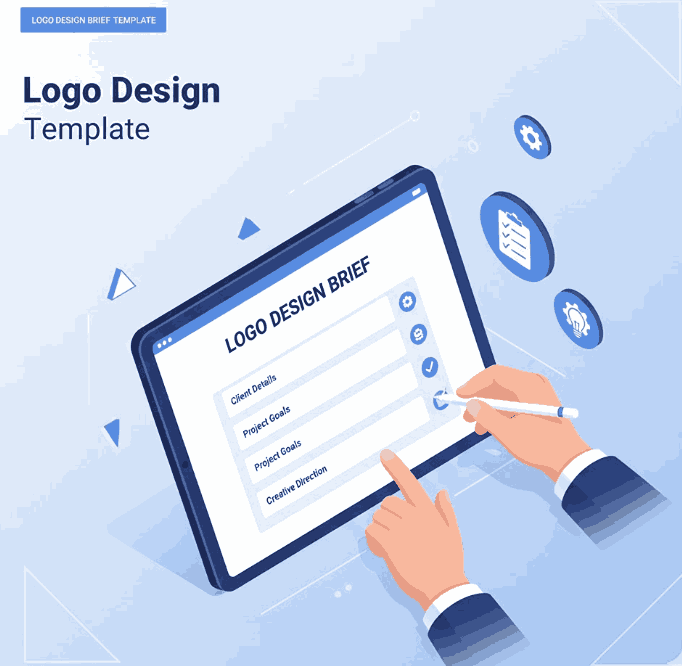
Logo Design Brief Template

5. Sample Logo Design Brief Template (Copy & Paste)

Logo Design Brief Template

1. Company Information

  • Company Name:
  • Industry:
  • Products/Services:
  • Mission & Vision:

2. Brand Personality
(Select or describe)

  • Modern / Traditional
  • Playful / Formal
  • Luxurious / Minimal

3. Target Audience

  • Age:
  • Gender:
  • Interests:
  • Location:

4. Competitors
(List at least 3 and their websites/logos)

5. Project Goals

  • What problem should the logo solve?

6. Style Preferences

  • Preferred Style (Modern, handwritten, bold, etc.)
  • Example Inspirations:
  • Colors to Use/Avoid:

7. Typography Preferences

  • Script / Sans / Serif / Calligraphy
  • Optional: Provide font examples

8. Usage Requirements

  • Where will the logo appear?

9. Deliverables

  • File formats (PNG, SVG, AI, EPS)
  • Primary + Secondary versions

10. Budget & Deadline

  • Budget range:
  • Deadline:
  • Milestones:

6. Best Fonts for Logo Design Brief Template (Mockups Included)

Here are premium calligraphy fonts from CalligraphyFonts.net that work beautifully for logo design. Use them as mockup samples in your brief:

Jaycee Looks Font (Handwritten Signature)

Perfect for personal branding, fashion labels, or creative studios.

Joanna Fanny Font (Elegant Script)

Ideal for luxury branding, boutique logos, wedding businesses, and premium products.

Anthonyela Calligraphy Font (Bold & Stylish)

Great for beauty brands, lifestyle logos, upscale packaging, and signature logos.

These fonts bring emotional value, personality, and professionalism to any branding project.

7. Tips for Designers & Clients Logo Design Brief Template

✓ For Designers

  • Ask follow-up questions when the brief is unclear
  • Offer 2–3 design directions based on the brief
  • Use premium fonts to elevate professionalism
  • Provide a brand style guide with logo delivery

✓ For Clients

  • Be honest and specific about preferences
  • Provide real examples and inspirations
  • Avoid “I’ll know it when I see it” feedback
  • Trust the designer’s creative judgment

8. Conclusion Logo Design Brief Template

A strong Logo Design Brief Template is essential for producing meaningful, visually consistent, and brand-aligned logo designs. Whether you run a business or work as a designer, using a well-structured brief saves time, avoids confusion, and leads to stunning results.

With the template provided above—and the recommended fonts from CalligraphyFonts.net—you have everything you need to create a professional and effective logo design workflow.

9. References

Posted on

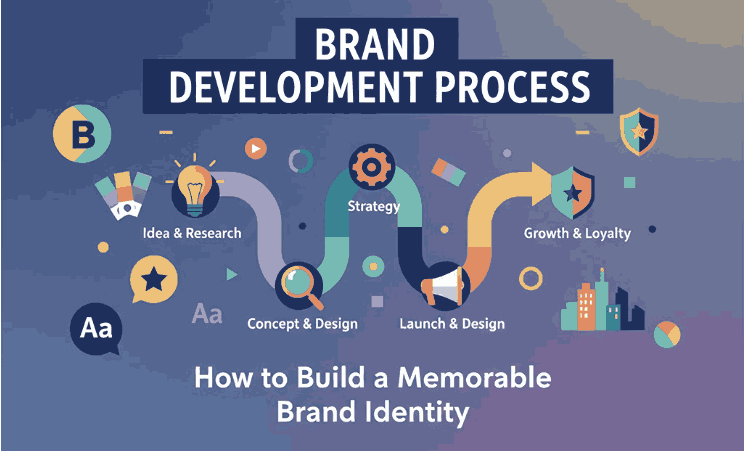
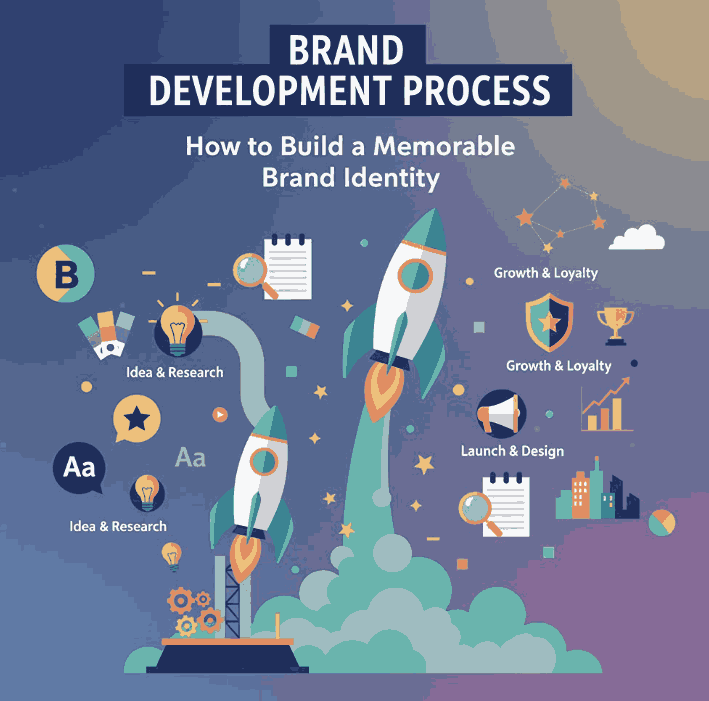
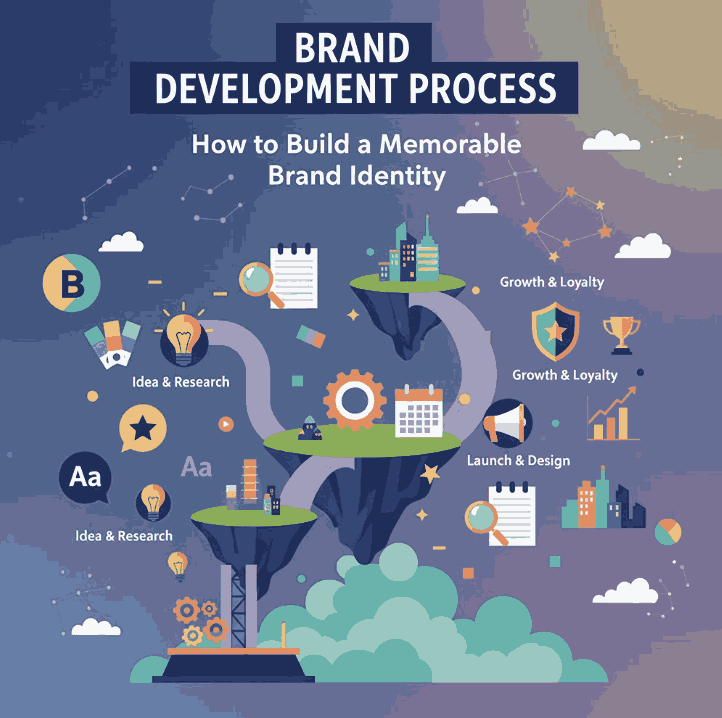
Brand Development Process: How to Build a Memorable Brand Identity

Brand Development Process

Table of Contents

  1. Introduction
  2. What Is Brand Development?
  3. The Importance of a Strong Brand
  4. Step-by-Step Brand Development Process
    • Step 1: Research and Analysis
    • Step 2: Define Your Brand Identity
    • Step 3: Create Your Visual Branding
    • Step 4: Develop a Consistent Brand Voice
    • Step 5: Implement and Monitor Your Brand
  5. Best Practices for Effective Brand Building
  6. Font Inspiration for Your Brand Design
  7. Conclusion
  8. References

1. Introduction

In today’s competitive market, a strong brand isn’t just about having a great logo or catchy slogan—it’s about building trust, recognition, and emotional connection. The brand development process helps transform your business from a simple idea into a recognizable identity that resonates with your target audience.

Whether you’re a startup or a growing company, understanding how to strategically develop your brand is the foundation for long-term success.

Brand Development Process

2. What Is Brand Development Process?

Brand development refers to the strategic process of creating and strengthening your brand identity. It combines research, creativity, and consistency to establish a clear message and visual style that communicates who you are and what you stand for.

It’s not just about your logo or color palette—it’s about how people perceive your company. A well-developed brand conveys professionalism, trustworthiness, and authenticity.

3. The Importance of a Strong Brand Development Process

A strong brand offers several advantages:

  • Builds customer trust and loyalty.
  • Differentiates your business from competitors.
  • Increases brand recall and recognition.
  • Supports consistent marketing strategies.
  • Boosts long-term profitability.

A clear brand identity ensures that your audience immediately recognizes and connects with your values, products, and message.

4. Step-by-Step Brand Development Process

Step 1: Research and Analysis

Begin by understanding your market, audience, and competitors. Conduct:

  • Market analysis to identify trends.
  • Audience profiling to define customer personas.
  • Competitor audits to spot opportunities.

Research gives direction and ensures that your brand’s foundation is built on data, not assumptions.

Step 2: Define Your Brand Identity

This includes defining:

  • Mission and vision – what your brand stands for.
  • Core values – what principles guide your brand’s behavior.
  • Unique selling proposition (USP) – what sets you apart.

Your identity should reflect your tone, style, and promise to customers.

Step 3: Create Your Visual Branding

Your brand’s visual elements—logo, colors, typography, and imagery—are what people notice first. Each element must be consistent with your message and emotional tone.

Here are some beautiful font inspirations from CalligraphyFonts.net that can enhance your brand visuals:

  • Charima Sharene Font – Elegant and feminine, perfect for fashion or lifestyle brands.
  • Rustte Font – Bold and dynamic, ideal for branding with a strong personality.
  • Catcalling Font – Playful and handwritten, great for creative businesses.
  • Jalousie Font – Classy and refined, suitable for premium or boutique brands.

Step 4: Develop a Consistent Brand Voice

Your brand voice is how you communicate. Whether it’s formal, friendly, or witty, your tone should match your brand identity and be consistent across platforms—website, emails, packaging, and social media.

A clear, consistent voice helps build emotional connection and recognition.

Step 5: Implement and Monitor Your Brand

Once your branding is complete, it’s time to roll it out. Apply your logo, fonts, and color schemes across all materials—digital and physical.

Regularly monitor brand performance through:

  • Social media engagement
  • Customer feedback
  • Brand awareness surveys

Adapt and evolve your strategy as your market changes.

Brand Development Process

5. Best Practices for Effective Brand Building

  • Be authentic—people connect with genuine stories.
  • Keep your visuals consistent.
  • Prioritize customer experience.
  • Evolve your brand with feedback.
  • Stay true to your mission and values.

Branding is not a one-time task; it’s an ongoing commitment to your audience.

6. Font Inspiration for Your Brand Design

Typography plays a major role in shaping brand perception. The right font can elevate your logo, website, and product design.
Explore the full collection of handcrafted fonts at CalligraphyFonts.net to find typefaces that bring your brand to life.

7. Conclusion

The brand development process is the foundation of every successful business. It’s about more than visuals—it’s about creating a unified experience that inspires trust, loyalty, and recognition.

By combining strategy, creativity, and consistency, your brand can stand out and leave a lasting impression.

Start building your identity today with the right fonts and design tools to express your unique story.

8. References

  • Canva — The Essential Guide to Branding
  • Wikipedia — Brand (encyclopedic background and references)
  • Din Studio — 4 Simple Steps to Build Branding
Posted on

Emerging TikTok Content New Trends You Should Try in 2025

Emerging TikTok Content Trends

Table of Contents

  1. Introduction
  2. Why TikTok Trends Matter for Creators & Brands
  3. Top Emerging TikTok Content Trends to Watch
    • 3.1 Micro-Storytelling & Episodic Content
    • 3.2 Text-Driven & On-Screen Caption Trends
    • 3.3 Search-First Content & Keyword Optimization
    • 3.4 Ambient / Low-Energy Content & ASMR + Relaxation
    • 3.5 Augmented Reality & Interactive Effect Formats
    • 3.6 Nostalgia & Retro Aesthetic Revivals
    • 3.7 Creator-Led Social Causes & Values-Based Content
  4. How to Experiment with These Trends (for Font / Design Creators)
  5. Font Mockup Ideas That Ride These Trends
  6. Measuring Trend Impact & When to Pivot
  7. Risks & Pitfalls to Avoid
  8. Conclusion & Call to Action
  9. References

1. Introduction Emerging TikTok Content Trends

TikTok’s content landscape is in perpetual motion. What’s viral today may feel stale tomorrow. As creators and brand owners (like a font shop), tapping into emerging TikTok content trends is essential to staying visible, relevant, and compelling.

In 2025, the trends on TikTok will increasingly favor authenticity, subtlety, and cross-format innovation. In this article, we explore which content styles are gaining momentum, how you can adapt them, and how your font products can shine alongside.

2. Why Emerging TikTok Content Trends Matter for Creators & Brands

  • TikTok heavily surfaces content that aligns with trending formats, sounds, and visual cues. Riding a trend can drastically amplify reach.
  • Trends act as signals in the algorithm: when many creators use similar formats, the algorithm recognizes and promotes them more broadly.
  • For niche creators (fonts, design), trends help you insert your content into larger conversations—making your work discoverable by audiences beyond your base.
  • As shown by Shopify’s 2025 TikTok trend guide, creators can spark visibility by adapting trends in ways consistent with brand identity.

Thus, knowing which TikTok content trends are emerging allows you to experiment smartly, not chase every fad blindly.

Emerging TikTok Content Trends

3. Top Emerging TikTok Content Trends to Watch

Here are several content styles and formats that are gaining speed in 2024–2025:

3.1 Micro-Storytelling & Episodic Content

Short, bite-sized narratives that continue across multiple videos (mini-series) are gaining traction. This keeps viewers coming back for the next “episode.”
Vidico calls micro-storytelling one of top viral trends in 2024.

3.2 Text-Driven & On-Screen Caption Trends

Because many users watch without sound, content emphasizing text overlays, kinetic typography, or screen captions is rising. These formats ensure the story is consumed even silently.
TikTok’s Creative Center and trend reports show strong adoption of text-first video styles (e.g. “read this for tips” layouts).

3.3 Search-First Content & Keyword Optimization

TikTok is evolving into a search engine: creators optimizing captions, hashtags, and even spoken words for keywords see more reach. Shopify’s trend guide emphasizes this shift.

3.4 Ambient / Low-Energy Content & ASMR + Relaxation

Instead of high-octane edits, calm visuals, lo-fi audio, and ambient storytelling (e.g. “a day with me,” “quiet studio”) are becoming popular. Many viewers seek relaxing or soothing content as a break.
Vidico includes ASMR among the trending formats.

3.5 Augmented Reality & Interactive Effect Formats

Filters, AR overlays, face tracking, and interactive effects (tap, swipe, reveal) are being used more creatively. As TikTok invests in its effects toolkit, creators exploiting new interactive layers gain novelty.
TikTok’s “Trending” features often spotlight new effect styles.

3.6 Nostalgia & Retro Aesthetic Revivals

Throwback styles—2000s, VHS glitches, vintage photo filters—are resurfacing as creators tap into emotional nostalgia. TikTok’s own trending reports and marketing commentary highlight aesthetic revivals.

3.7 Creator-Led Social Causes & Values-Based Content

TikTok audiences increasingly respond to authenticity and purpose. Creators sharing values, mental health, social justice, or purpose-driven messaging are trending.
TikTok’s Year on TikTok 2024 emphasizes creativity and community impact.

4. How to Experiment with These Emerging TikTok Content Trends (for Font / Design Creators)

Here’s how you can test these trends in your niche:

  • Mini-series about font design — break down glyph creation step by step across days.
  • Text-driven “font tips” videos — overlay advice such as “Pair these two font styles to improve readability.”
  • Search-first captions — use keywords like “modern calligraphy font”, “font pairing tips”, “typography trend 2025”.
  • Ambient design process clips — a soft montage of sketching, vectoring, or refining glyphs.
  • AR / filter-based font reveals — reveal a font using an effect or transformation.
  • Nostalgia-inspired type mockups — vintage poster style mockups or retro typography visuals.
  • Values or storytelling about your design journey — share creative challenges, lessons, or brand ethos in micro form.

By pairing your design skills with these trending formats, your content becomes both niche and discoverable.

Emerging TikTok Content Trends

5. Font Mockup Ideas That Ride These Emerging TikTok Content Trends

Here are specific fonts and how you might use them in trend-savvy content:

You might create videos like: “Behind the design of Creatoria — Episode 1,” showing sketch → final vector, with ambient background music. Or a “font pairing tip” video using Hashtag Trend for overlay, with text-first style.

6. Measuring Trend Impact & When to Pivot

To evaluate whether a trend is working for you:

  • Track view growth, completion rates, replays, shares.
  • Compare new content vs baseline: did this trend-driven video outperform typical posts?
  • Maintain a “trend experiment log” — try formats for a week, analyze, double down or abandon.
  • Watch for audience feedback: comments asking for repeats, requests, or remixing your style.

If a trend doesn’t yield lift, shift to another emerging style. Trends are ephemeral—it’s experimenting, not committing forever.

7. Risks & Pitfalls to Avoid

  • Chasing every trend dilutes brand identity.
  • Forcing your content into formats you dislike or can’t deliver well.
  • Overusing effects or filters just to “look trendy”—clarity matters.
  • Ignoring originality — trending format + unique twist wins.
  • Posting too many experiments at once — stagger to observe performance.

8. Conclusion & Call to Action Emerging TikTok Content Trends

Emerging TikTok content trends like micro-storytelling, text-forward formats, ambient visuals, and AR interactivity are offering new ways for creators to stand out—even in niche fields like fonts and design. By experimenting strategically, pairing trends with your design voice, and measuring impact, you can tap into TikTok’s discovery engine while staying authentic.

References

  • Shopify — “Top TikTok Trends in 2025: 18 Ideas To Go Viral”
  • Vidico — “20+ Most Popular TikTok Trends to Watch (2024 Updated)”
  • TikTok Newsroom — TikTok trending 2024
  • Simon Kingsnorth — “TikTok Marketing Trends to Watch in 2024”